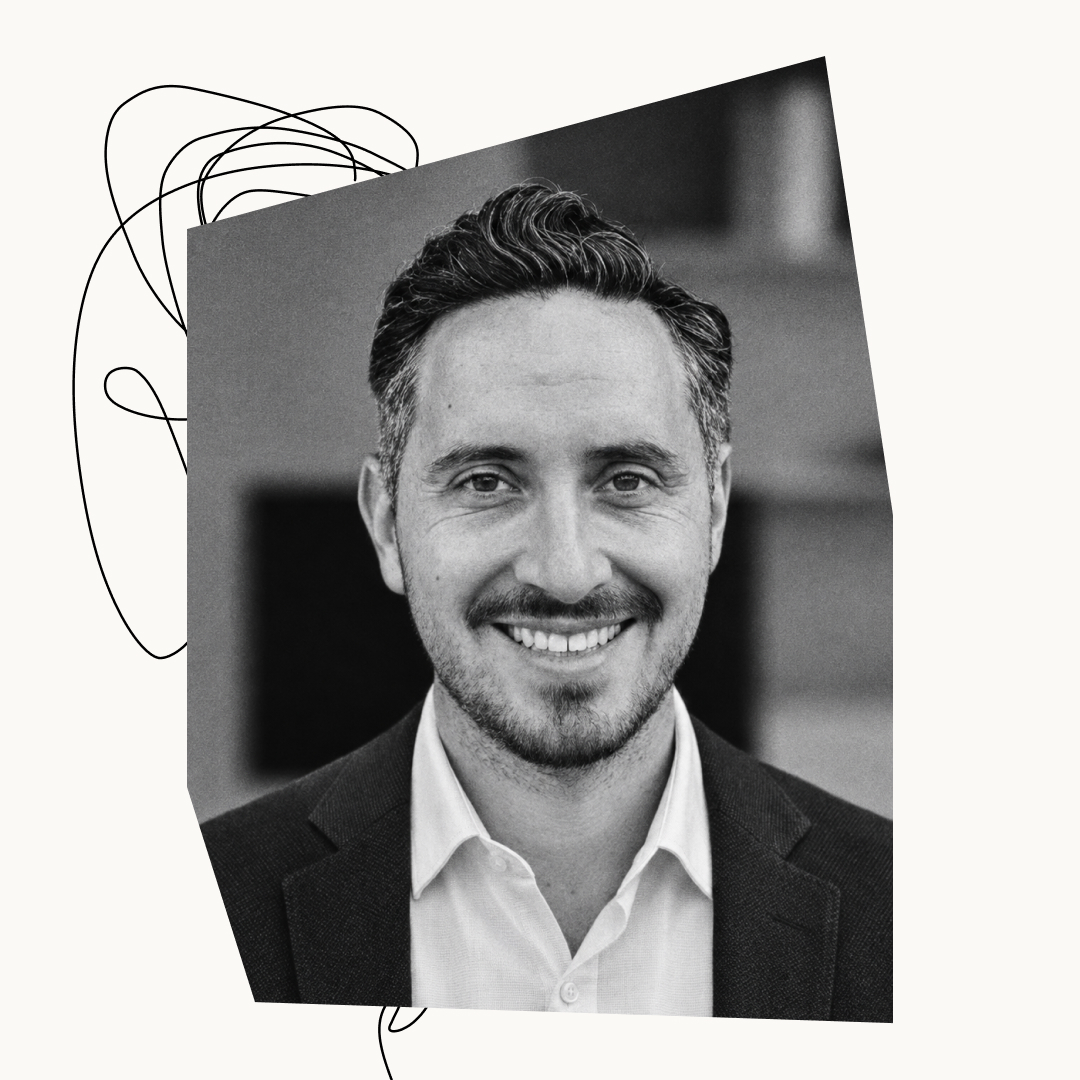
David Apple’s son is six. He has Charcot-Marie-Tooth type 1A, a rare genetic disease that affects about 70,000 people in the US. After the diagnosis, David first had to work out what he needed to learn. The list ran from neurology and genetics to pharmacology and regulatory. He learned a little about most of it and went deep on his son’s disease. That became Shark Tooth Biotech. There he’s searching FDA-approved drugs for ones that could help, then testing which combinations work better together, and the early data looks promising. We talked with David about “drug assembly,” why he’d rather CMT1A be the tenth disease a technology treats than the first, and what it would take for the system to work for rare disease families.
What does Shark Tooth Biotech do, in your own words?
We are developing treatments for a rare genetic disease called Charcot-Marie-Tooth (CMT) type 1A which affects 70,000 people in the US, including my 6 year old son.
You started Shark Tooth because of your son. What did you have to learn fast when you went from parent to founder?
The first thing to figure out was actually WHAT to learn because there were (and still are) so many new topics for me to learn about. I needed to learn about neurology, biology, genetics, diseases, pharmacology, AI/ML, regulatory, legal, chemistry - and also the different technologies / modalities available to develop treatments. I decided to try to go to shallow and broad regarding most topics, but I decided to go very deep in understanding my son's disease, and the research that had happened to date. Taking the time to learn was the most important first step in generating a hypothesis on how I could be part of developing a treatment for CMT, and ultimately giving me the conviction to start Shark Tooth Bio.
You call your approach "drug assembly" instead of drug discovery. What does that look like day to day?
My lead program changed from siRNA to drug repurposing, and I would argue that "drug assembly" is even more relevant to what I'm doing today than when I started. Today my main focus is on figuring out which existing FDA-approved drugs can improve CMT1A, and then figuring out which combinations of those drugs might be synergistic. We just got some really promising data, so it's a very exciting time at Shark Tooth Bio!
You'd rather CMT1A be the tenth disease a technology treats than the first. Why?
There are two main drivers for deciding on that "inclusion criteria" for any research I would consider pursuing:
1. Reducing risk: the focus is not if the technology works, but rather we focus on whether or not it could work for CMT1A.
2. Faster and cheaper: leveraging an drug that was previously FDA approved drastically reduces the cost and increases the speed to patients.
“Science tells us what is possible, but it doesn't tell us what ought to exist.”
What's something about rare disease research that most people get wrong?
Permission to go on a rant :)
Science tells us what is possible, but it doesn't tell us what ought to exist. Instead, the system that determines what gets built is capitalism. Capitalism is great for many industries where progress is correlated with profit maximization. That said, when an important problem doesn't maximize profits - as is inherently the cast with rare diseases - unfortunately capitalism fails to help address them, and it feels like the system abandons us. There is profit to be made in rare disease, it just doesn't maximize profits the same way a mainstream indication would. What the rare disease community needs is not necessarily better/newer science... what we need is to create better incentives in the system to funnel more money to solving these important problems. The PRV (Priority Review Voucher) is a great example of a mechanism that incentivizes rare disease research. We need to make the PRV permanent (it currently expires in 2029), and we need more incentives like that.
Who else is doing good work that more people should know about?
There are so many parents that are fighting the same battle as I am for their kids with a variety of rare diseases, and I think they are all doing incredible work to move mountains for their kids. If was only going to mention one of them, it would be Noah Auerhahn who Founded Uncommon Therapeutics. I met Noah early on this journey, and he was one of the first people to inspire me to start my own Biotech.